Journal
Full-grain, top-grain, genuine: how to read a leather label
Nov
Walk into most shops and every bag is “genuine leather”. The phrase sounds reassuring, but on a label it is the lowest grade that can still legally be called leather. Here is how the grades actually stack up, and what to look for before you pay.
The four grades, from best to worst
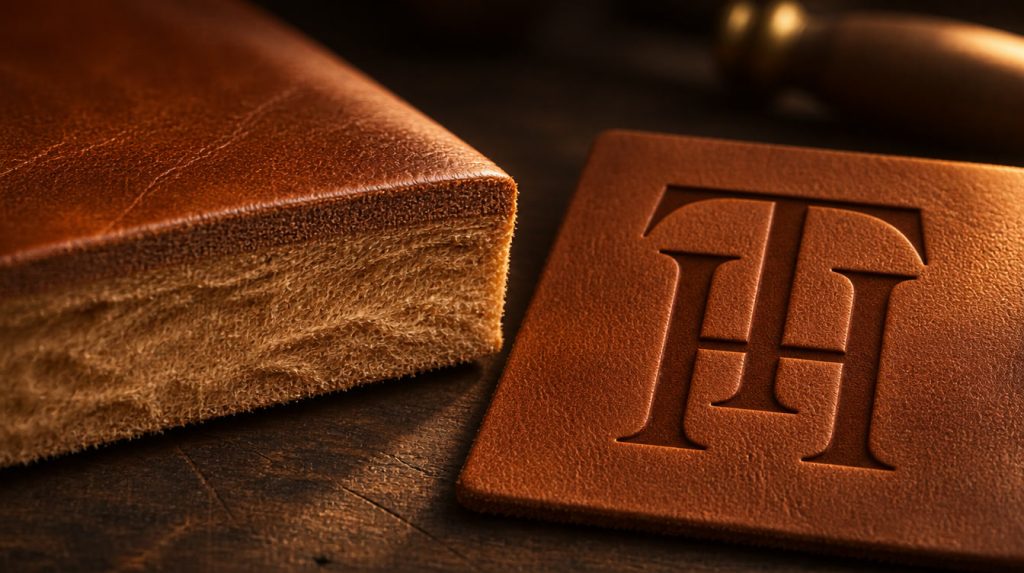
Full-grain. The complete top layer of the hide, with the natural grain left intact. It is the densest, strongest part of the skin, and the only grade that develops a true patina: the surface darkens and softens with handling instead of wearing through. Small marks, pores and healed scars are normal — they prove nothing has been sanded off.
Top-grain. The same layer, but the surface has been sanded to remove imperfections and then re-coated with a pigment finish. It looks uniform on day one and resists stains, but the coating is what you touch, not the leather. Over years it tends to crease and lose depth rather than improve.
“Genuine” leather. The lower split of the hide left after the top layer is taken, embossed with an artificial grain and sprayed with finish. It is real leather in the legal sense and nothing more. Expect it to go limp, peel at the edges and crack at folds.
Bonded leather. Shredded leather fibres glued onto a backing and printed with a grain. Treat it as a plastic product with a leather smell.
Five checks you can do in the shop
- Look at the grain. Full-grain shows slight irregularity — pores of different sizes, faint growth lines. A perfectly repeating pattern is a stamp.
- Press it with a thumb. Full-grain wrinkles finely and recovers; coated leather dents and shows a flat, plastic crease.
- Check the edges. On a good bag the edges are either hand-painted and sealed or neatly turned. Raw edges that look fibrous or fuzzy usually mean split leather.
- Smell it. Vegetable- and chrome-tanned full-grain smells of leather, not of solvent or vinyl.
- Ask what layer it is. A brand that uses full-grain will say so, prominently. Silence or “premium genuine leather” is an answer in itself.
What we use and why
Every Tannery Heritage bag, briefcase and wallet is cut from full-grain cowhide, either smooth or with a pebble or textured grain. It costs more per square foot and wastes more of the hide, because scars and brand marks have to be cut around rather than sanded away. In return you get a piece that is still presentable, and usually better looking, ten years in.
If you are comparing two bags and one is noticeably cheaper, this is almost always where the saving was made.
