
Journal
How to care for a full-grain leather bag (and what never to do)
Nov
A full-grain leather bag does not need much. It needs a little, consistently, and it needs you to avoid a short list of things that do more damage than years of use. This is the routine we recommend for our own pieces.
Every week: thirty seconds
Empty the bag, shake out the lining and wipe the outside with a dry, soft cloth. Dust and grit are mildly abrasive; a quick wipe keeps the surface from dulling. If the bag got wet, let it dry at room temperature, stuffed loosely with paper so it holds its shape. Never speed it up on a radiator or with a hairdryer — heat pulls the natural oils out and leaves the leather brittle.
Two or three times a year: condition
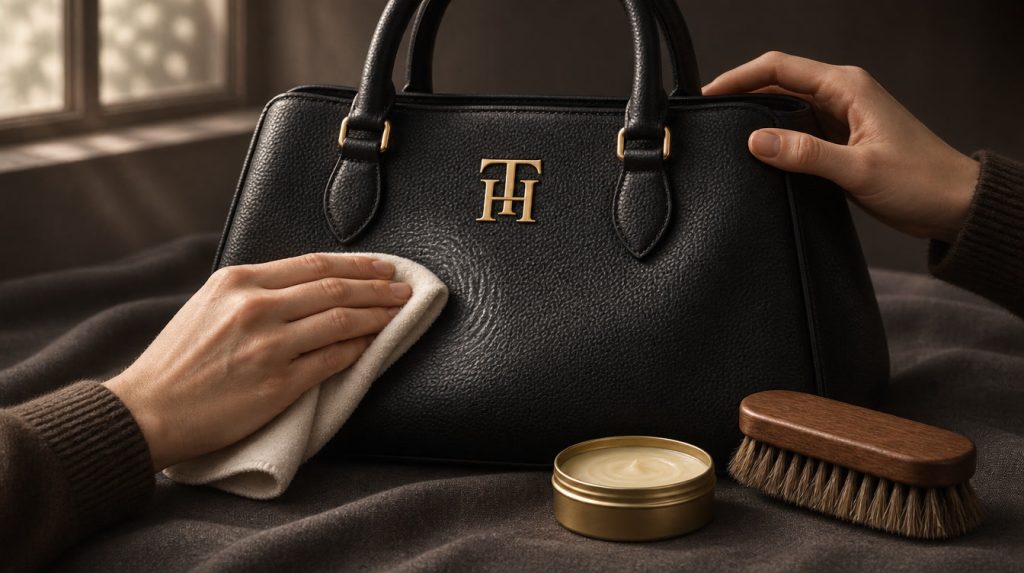
Leather is skin; it loses moisture. A pea-sized amount of a neutral leather balm or cream, worked in with a cloth in small circles and buffed off after ten minutes, restores the oils and deepens the colour. Test on the base first, use less than you think, and avoid silicone sprays and anything that promises a “shine” — those seal the surface and stop it breathing.
Lighter leathers (tan, natural, blush) will darken slightly with conditioning. That is the patina starting; it is the point of full-grain.
Hardware and edges
Brass darkens naturally. If you prefer it bright, a soft cloth is enough; keep metal polish away from the leather. Painted edges can be refreshed with a drop of edge paint from a repairer, but with normal use they last for years.
Storage
Out of direct sunlight, in the dust bag, with the handles lying flat rather than hooked. Do not store leather in plastic — it traps moisture and can cause mould. If a bag will be put away for a season, condition it first and stuff it lightly.
Things to never do
- Baby wipes, washing-up liquid, nail-varnish remover or alcohol on the leather — all of them strip the finish.
- Overfilling. A structured bag forced open at the top will keep that shape.
- Leaving it on the floor of a car in summer or a boot in winter. Heat and cold both dry leather out.
- Hanging a heavy bag by one handle for weeks. Stitching is strong; it is not meant to carry the full weight on one side indefinitely.
Scratches, rain and ink
Light scratches on full-grain can usually be rubbed out with a clean fingertip — the warmth redistributes the oils. Rain spots disappear as the leather dries evenly; if a tide mark remains, dampen the whole panel lightly with a cloth and let it dry together. Ink and oil stains are the exception: do not scrub, do not use a solvent, and take the bag to a leather specialist within a day or two.
Follow this and a Tannery Heritage piece will look better at five years than it did on the day it arrived. If something does go wrong, write to us first; many things can be repaired.
